







Key Takeaways:
-
Xanthan gum is a naturally fermented polysaccharide used in cat food as a texture stabiliser and binder, FDA-approved and considered safe in moderate amounts.
-
Cats are extremely texture-sensitive, and xanthan creates the smooth, juicy consistency they prefer, significantly reducing food rejection and improving palatability across batches.
-
Xanthan has absolutely zero nutritional value, providing no protein, fat, or beneficial nutrients, making it purely a textural additive with no direct health benefits.
-
Excessive xanthan consumption may cause digestive issues including loose stools, diarrhea, and vomiting, with cats having IBD or sensitive stomachs being particularly vulnerable.
-
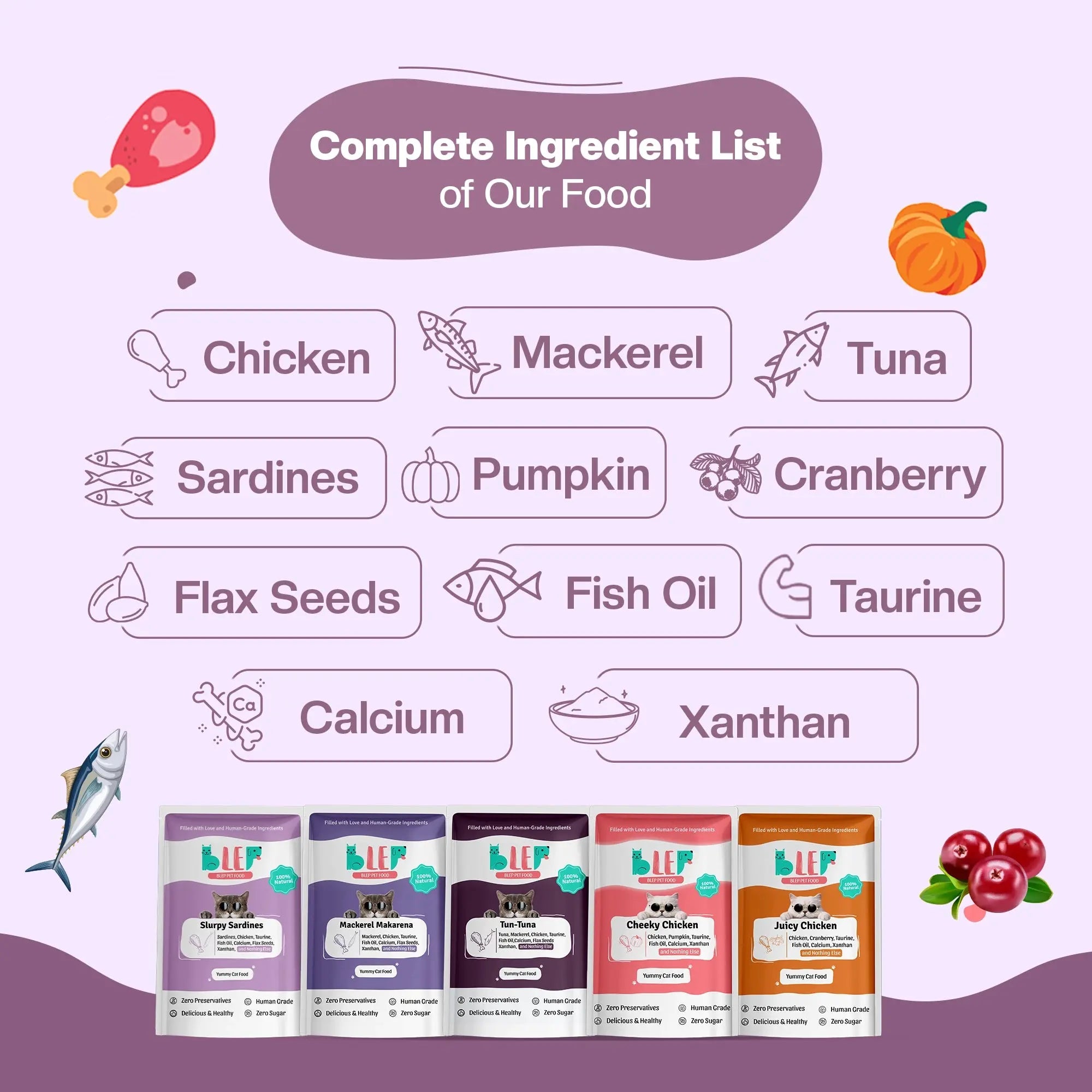
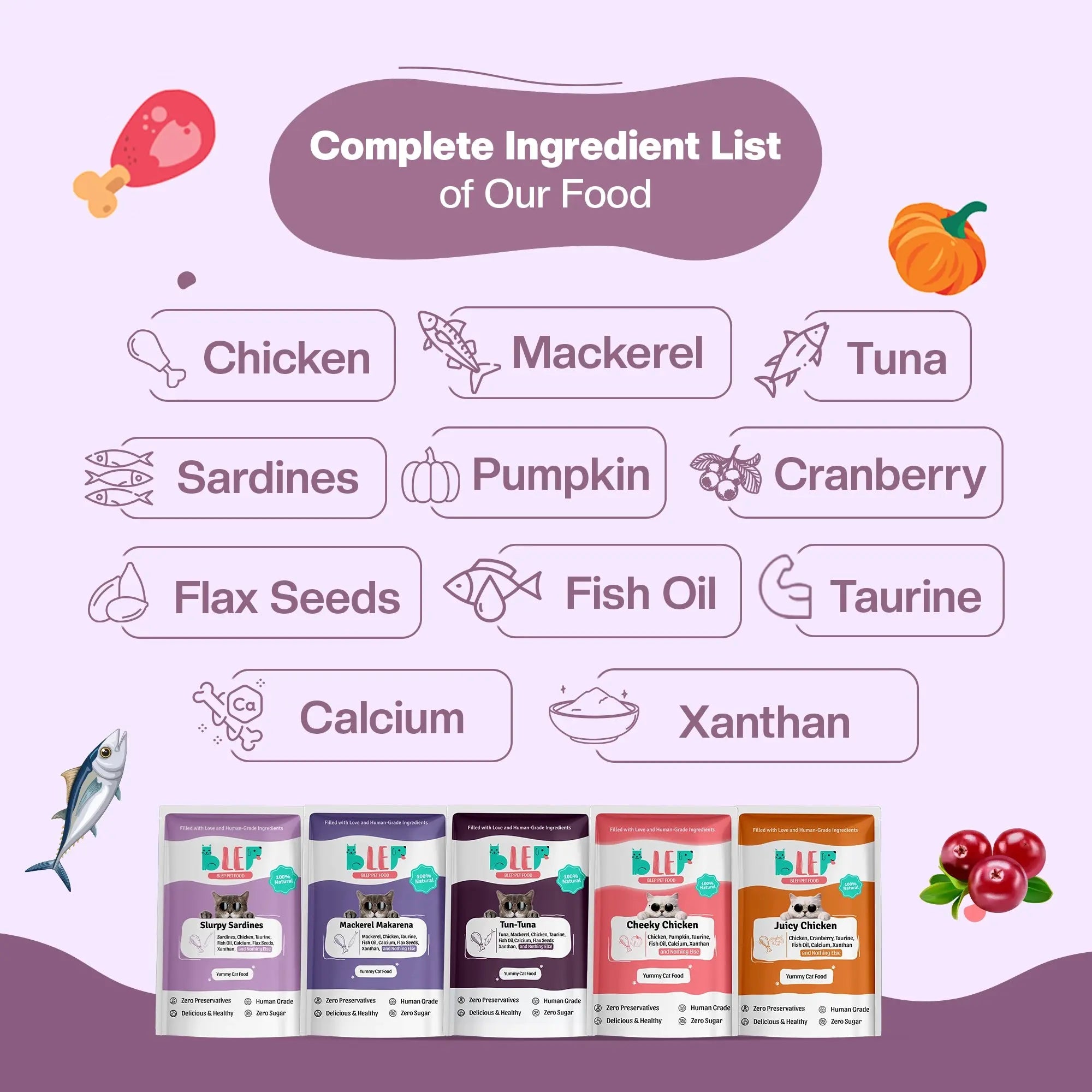
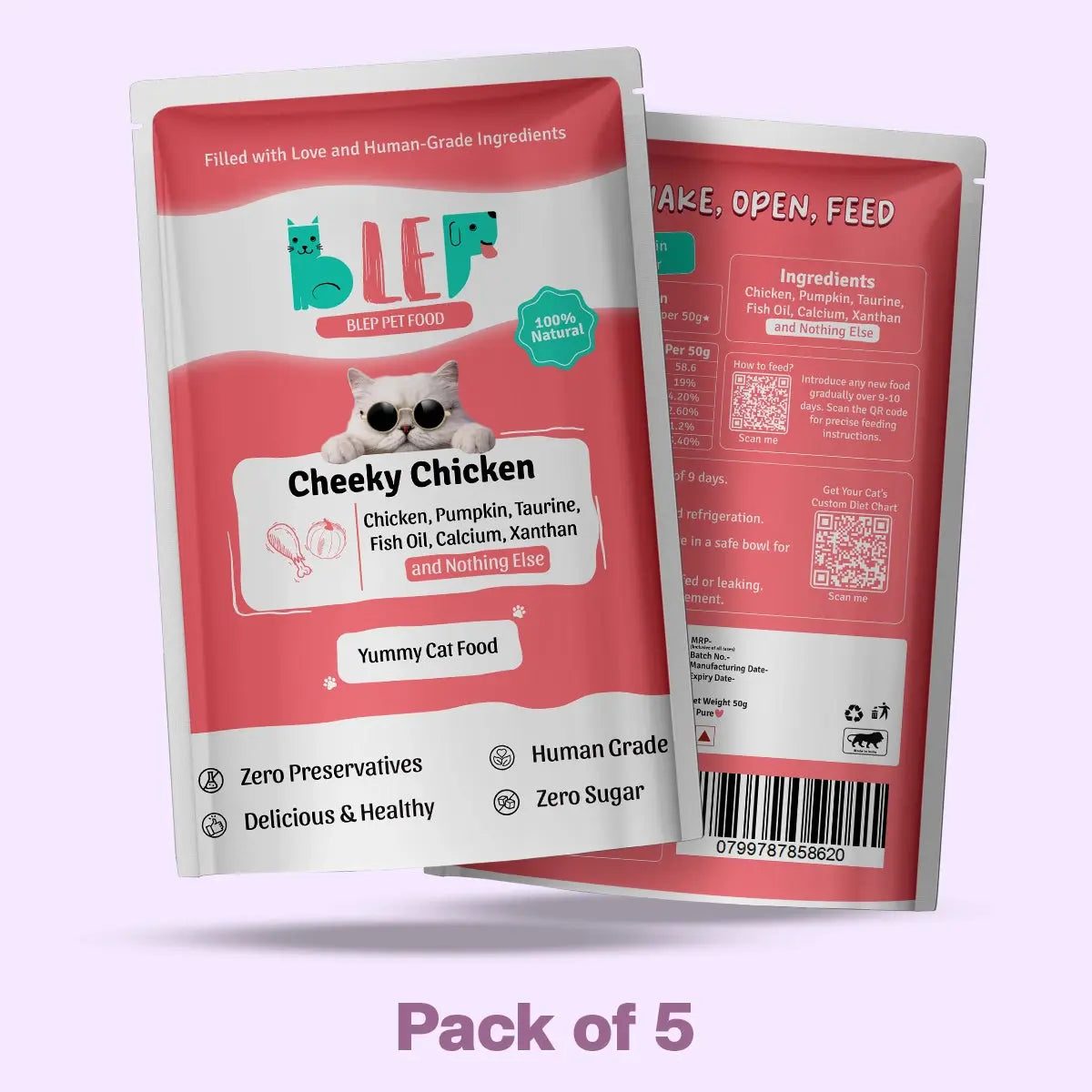
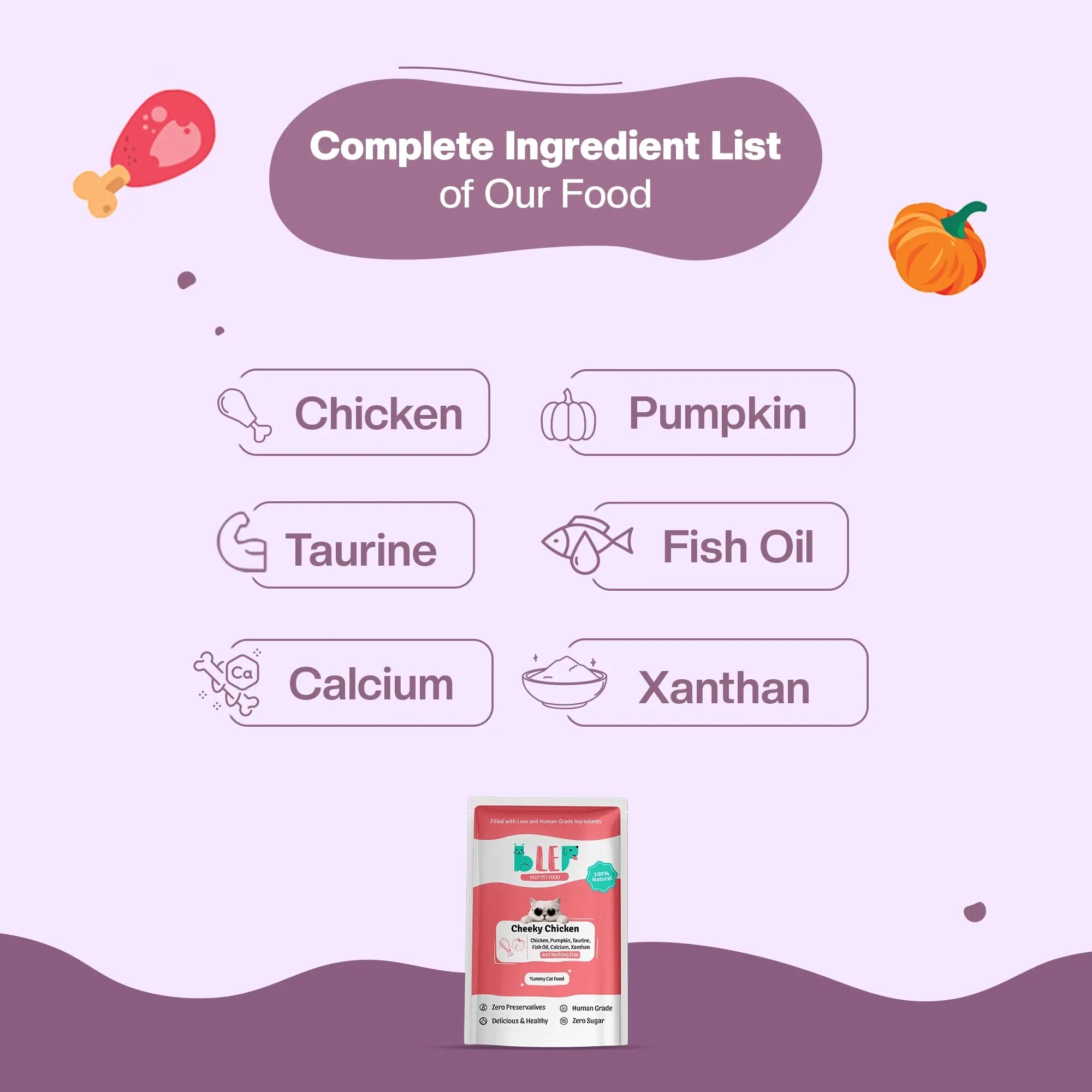
BLEP adds just 0.01% natural xanthan to their 100% natural, zero-preservative natural cat food, to give it the familiar texture that cats like.
In moderation, natural xanthan is safe for cats. It is a gum that is frequently used in cat food as a thickener or stabiliser; xanthan helps keep the texture of cat food smooth, prevents the separation of ingredients, and enhances palatability. Xanthan is made from a bacteria called Xanthomonas campestris, through the process of fermentation. The thick, gravy-like consistency that cats love often comes from xanthan and it reduces food rejection. However, consuming too much xanthan may cause loose stools, diarrhea, or vomiting in cats with a sensitive digestive system.

What is Xanthan?
Xanthan gum is a polysaccharide with many uses, but it is primarily used as a food additive. It is used in cat food to keep fresh food smooth and juicy, to bind all the ingredients together, and to stabilise the texture of the food. In a way, it acts like gluten. Some cats may be sensitive to gluten; for them, cat food with Xanthan may be a good alternative.
Natural xanthan is extracted from the bacterium Xanthomonas campestris through microbial fermentation. It was discovered by American chemist Allene R. Jeanes and her team at the USDA Northern Regional Research Laboratory. Then, in 1968, it got approved by the FDA. Now xanthan is recognised as safe across the US, Canada, and European countries.
Why is Xanthan used in cat food?
Most cats are notoriously picky eaters and they are very sensitive to texture. They like the juicy, slurpy, smooth texture that most wet cat food has. Now, if a cat food is made of 100% natural, human-grade ingredients, getting that texture can be difficult. In fact, texture may vary from batch to batch. That’s why Xanthan is used in some cat food: it binds the ingredients together, giving it a smooth, lickable texture. It stabilises the food, helping keep the texture similar in each batch, which fosters familiarity in cats. This helps reduce food rejection and pickiness.

So, what is the problem with Xanthan in cat food?
The main problem with xanthan is that it has no nutritional value. It contains 0% protein, 0% fat; nothing that may benefit your cat. The other cause for concern is that while natural xanthan is considered safe for consumption by the FDA, there may be some health risks to cats if they eat a large amount of xanthan. Over-consumption of xanthan may cause some digestive issues in cats, such as loose stools, diarrhea, or vomiting in cats with a sensitive digestive system.

Does BLEP cat food have Xanthan?
BLEP has always believed in 100% transparency; so we’ll tell you everything. When we started making cat food in 2025, we didn’t add xanthan to our cat food. Why? Because we believe that ingredients with zero nutritional value should not be part of our recipes.
Then we talked to thousands of customers who were feeding BLEP cat food, and one feedback came in often enough for us to take notice: some cats were hesitant about eating BLEP at first because of the unfamiliar texture.
Hesitation to try new food is normal, especially in cats, because they are very set in their ways. However, if the texture was causing them to reject the food, even though it’s 100% natural, has zero preservatives, sugar, or chemicals, that was a problem. So we decided to add 0.01% of natural xanthan to our cat food: for their happiness. It would keep the texture smooth, but not alter the nutritional profile.
This has its positives and its negatives. On one hand, there isn’t enough xanthan in our cat food to cause any harm to your cat or dilution of nutrition. On the other hand, it is an ingredient that has zero nutritional value, something that is against our principle.
So, it is a compromise on our part. But our palatability test results have proven that the compromise is worth it: cats now love the food even more!
Ultimately, the xanthan in BLEP cat food has no real health risks (unless your cat has a xanthan allergy), given the tiny amount that goes in. But it keeps the texture of the food smooth, keeps the ingredients from separating, and reduces food rejection. However, we leave the choice to you.
Frequently Asked Questions:
Is xanthan safe for cats?
Yes, xanthan gum is safe for cats in moderation. It is usually added to wet cat food to make the texture more smooth, improve palatability, and keep the ingredients from separating. However, too much may cause digestive issues like diarrhea or vomiting.
Why do cat food brands use xanthan ?
Xanthan keeps the cat food texture consistent, binds the ingredients together for a smoother mouthfeel, and helps reduce food rejection in picky cats. That’s why cat food brands use it.
What are the side effects of xanthan in cats?
Xanthan is not toxic for cats. However, if a cat eats too much xanthan, it may cause digestive issues, such as loose stool, frequent bowel movement, vomiting, or diarrhea. Cats with sensitive stomachs or existent gastrointestinal issues are more likely to have these side effects.
Can xanthan upset a cat’s stomach?
Yes, some cats may get an upset stomach if they eat too much xanthan. If a cat is sensitive or allergic to xanthan, it will usually show up as a stomach issue.
Is xanthan bad for cats with IBD?
Yes, xanthan may not be suitable for cats with inflammatory bowel disease (IBD). It is a soluble fibre, so it may sometimes worsen gut imbalance. Cats with IBD already have a sensitive stomach, so it is best to avoid feeding them cat food with xanthan.
Does xanthan have any benefits for cats?
Xanthan may have some mild benefits: it may support digestion by feeding good gut bacteria because it is a soluble fibre, help reduce obesity in cats by promoting satiety, and keep the food ingredients integrated so picky cats get all the nutrients they need.
Is xanthan natural or synthetic?
Xanthan is extracted from a bacterium called Xanthomonas campestris through fermentation. So it is completely natural.
Should I avoid cat food with xanthan?
Unless your cat is allergic to xanthan or has IBD, it is fine to feed cat food that contains a moderate amount of xanthan. However, if you’re in doubt, it is best to check with the vet before feeding it to your cat.
How much xanthan is safe for cats?
Very small amounts of Xantham is enough in cat food to do its job. In fact, even 0.01% of Xanthan is also enough to create an emulsion effect in cat food. Therefore, cat food with such low amounts is considered completely safe for cats, even by the FDA.
Looking to explore more tips on how to look after your furry friend? Check out our other guides like Can Dogs Eat Apples?, Can Dogs Eat Blueberries?, Dog Food for Weight Loss, Raw v/s cooked meat for dogs, Home Remedies to cure tick fever, Finding Good Dog Food in India, How many times should I feed my dog?, Things you should do to keep your pet healthy, Types of Dog Food, How Prebiotics and Probiotics can improve your dog's digestion, Essential Tips for a New Dog Parent, and others. Each guide is designed to help you make better food and care choices for your dog, to keep them happy, healthy, and thriving.
Resources:
https://pmc.ncbi.nlm.nih.gov/articles/PMC8323031/
https://en.wikipedia.org/wiki/Xanthan_gum
https://www.healthline.com/nutrition/xanthan-gum#TOC_TITLE_HDR_4
https://www.medicalnewstoday.com/articles/320272#potential-health-risks
https://www.justanswer.com/cat-health/llpwm-heard-xanthum-gum-bad-dogs-bought.html