







Yes, processing does destroy nutrients, and the degree of destruction depends directly on how much heat and pressure food is exposed to. Ultra-processed dog food made through extrusion loses heat-sensitive vitamins, reduces the bioavailability of key amino acids like lysine through the Maillard reaction, and produces compounds the body cannot use. This is why most ultra-processed commercial foods add synthetic vitamins back in after manufacturing. Gentle cooking at lower temperatures preserves significantly more of the natural nutrient profile and does not carry the same risks.
Why does this matter?
-
Since ultra-processed commercial food is the primary, often only, source of nutrition for most dogs, nutrient losses during manufacturing are not a minor concern. Vitamin loss during extrusion is a serious issue, as deficiencies can cause severe illness or even death.
-
The synthetic vitamins sprayed back onto food after extrusion are a workaround, not an equivalent. The food is nutritionally reconstructed after being degraded, not naturally nutrient-dense to begin with.
-
Pet parents who assume the label reflects what their dog is actually absorbing may be significantly overestimating the nutritional value of heavily processed food.
What do vets generally agree on?
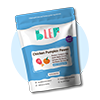
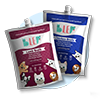
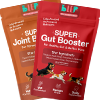
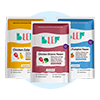
Extrusion has both desirable and undesirable effects. Desirable effects include improved starch digestibility and destruction of antinutritional factors. Undesirable effects include reduction of protein quality due to the Maillard reaction, decreased palatability, and loss of heat-labile vitamins. The Maillard reaction is particularly significant for protein quality. The Maillard reaction reduces the bioavailability of essential amino acids such as lysine by forming reaction products the body cannot use. Research has reported that the difference between total and reactive lysine in pet foods can be up to 61.8%, meaning foods for growing dogs may be at risk of supplying less lysine than required. Minerals are more stable under heat but can be lost through leaching. A minimally processed, 100% natural dog food like BLEP dog food is formulated to retain its natural nutrient profile rather than relying on post-processing synthetic fortification.
When to be careful?
Some cooking is necessary and beneficial. Heat kills pathogens, improves starch digestibility, and deactivates antinutrients like trypsin inhibitors present in raw legumes. The concern is not cooking itself but extreme, repeated industrial processing. Raw food carries its own risks including bacterial contamination, and is not appropriate for immunocompromised dogs or households with young children or elderly people. The goal is minimally processed, not unprocessed.
Sources:
-
https://www.cambridge.org/core/journals/nutrition-research-reviews/article/maillard-reaction-and-pet-food-processing-effects-on-nutritive-value-and-pet-health/E085D3648D6A209003AB4D0DB72DB8B2 https://www.sciencedirect.com/science/article/abs/pii/S0377840121001619
-
https://research.wur.nl/en/publications/maillard-reaction-products-in-pet-foods/