






Key Takeaways
-
After a two-week course of metronidazole, a common antibiotic for dogs, gut bacteria were still disrupted four weeks later.
-
In a trial, every dog given two common antibiotics developed diarrhoea. A gut supplement eased some side effects but didn't prevent them.
-
Postbiotics and the yeast S. boulardii aren't killed by antibiotics, which makes a complete supplement more useful than bacterial probiotics alone.
-
Give bacterial probiotics a couple of hours apart from antibiotic doses, and continue for two to four weeks after the course.
-
Never stop or change an antibiotic course without your vet.
Yes, a gut health supplement can support your dog’s microbiome when they are on antibiotics. Antibiotics can affect beneficial gut bacteria along with harmful ones.With your vet's approval, a dog gut health supplement may help support digestion and nutrient absorption while your dog is on medication and during recovery. Never stop an antibiotic course early without speaking to your vet.
What antibiotics do to your dog's gut
Antibiotics can't tell good bacteria from bad, so they disrupt the gut microbiome, the microbes that help your dog digest food and stay well. The common results are loose stools, vomiting and a poor appetite.
The effects outlast the course. In a study of healthy dogs, gut bacteria were still disrupted four weeks after a two-week metronidazole course, and a key bacterium hadn't recovered in 7 of 16 dogs. After tylosin, another common antibiotic, some changes last eight weeks or more.

What the research says
In a 2019 trial, 22 healthy dogs were given two common antibiotics. All of them developed diarrhoea, 77% vomited and 41% went off their food. Dogs that also received a bacterial and yeast supplement ate better and, in part of the trial, had firmer stools, but the supplement didn't prevent diarrhoea or vomiting. The honest takeaway: gut support can ease antibiotic side effects, but it won't stop them entirely.
Saccharomyces boulardii is worth knowing about. It's a beneficial yeast, not a bacterium, so antibiotics don't kill it.
One more point: 2024 European vet guidelines advise against antibiotics for most mild to moderate cases of diarrhoea. If your dog is prescribed them for loose motions, it's fair to ask your vet whether they're needed.

Why a complete dog gut health supplement beats probiotics alone
Bacterial probiotics are partly killed by the very antibiotics they're meant to support. A multi-part formula keeps working where they can't.
|
Component |
How it supports your dog during and after antibiotics |
|
Postbiotics |
Do not need to be alive, so antibacterial medicines do not kill them. They provide beneficial microbial compounds. |
|
Prebiotics |
Feed beneficial gut bacteria as the microbiome recovers. |
|
Probiotics |
Add beneficial microorganisms. S. boulardii, being a yeast, is not affected in the same way as bacterial strains by antibacterial medicines. |
|
Digestive enzymes |
Help break down proteins, fats and carbohydrates. |
|
Botanicals |
Ingredients such as ginger and slippery elm are traditionally used to support digestive comfort, although dog-specific clinical evidence varies. |
A complete formula offers broader support than probiotics alone, so your dog’s gut is covered from all angles. You can get to know more about their functions on our blog What are prebiotic, probiotic and postbiotic supplements for dogs?
How to give it alongside antibiotics
-
Check with your vet. Ask the vet when the antibiotic is prescribed, especially if your dog has a health condition or takes other medicines.
-
Space the doses. Give the supplement a couple of hours after each antibiotic dose, unless your vet says otherwise.
-
Start gradually. Follow the pack's starting dose, then move to the full weight-based dose.
-
Keep going after the course. Continue for at least two to four weeks after the last antibiotic dose, as the gut is still recovering.
-
Finish the antibiotic course. Don’t stop even if stools improve.

Probiotic chews vs powder vs capsules for dogs
|
Format |
Ease of giving |
Picky eaters |
Watch out for |
|
Chews |
Easiest, given like a treat |
Usually accepted |
Heat during manufacture can kill live cultures, so check for low-temperature processing |
|
Powder |
Mixed into food |
Can be refused if it changes the taste |
Moisture and Indian humidity can reduce potency once opened |
|
Capsules |
Precise dose |
Often need hiding in food |
Harder to give daily |
The best format is the one your dog takes every day. Check how a product is processed, stored and tested, and whether its CFU count is guaranteed through the stated shelf life.
How to choose the best probiotics for dogs in India
Before you buy, check for:
-
Named strains, not just "probiotic blend"
-
A stated CFU count, guaranteed until expiry
-
Several strains, including S. boulardii
-
Added prebiotics and postbiotics for support that survives antibiotics
-
Low-heat processing and storage advice suited to Indian heat
-
Vet formulation and a full ingredient list, including allergens like chicken or dairy

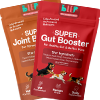
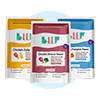
BLEP SUPER Gut Booster: a 5-in-1 dog gut health supplement
BLEP SUPER Gut Booster ticks every box on that checklist. Each daily chew combines:
-
Probiotics: 5 billion CFU across 9 named strains, including S. boulardii
-
Postbiotics: yeast and Lactobacillus acidophilus fermentates
-
Prebiotics: inulin, FOS, GOS and guar fibre
-
Digestive enzymes: protease, amylase, lipase and cellulase
-
Botanicals: slippery elm, marshmallow, fennel and ginger
It also contains L-glutamine, zinc carnosine and tributyrin to support the gut lining. It's cold-pressed below 25°C to protect live cultures. Start with half the dose for seven days, then move to the full weight-based dose. It's for dogs over three months old and contains chicken. It supports recovery but isn't a treatment.
Frequently Asked Questions
Can I give BLEP SUPER Gut Booster and antibiotics at the same time?
Yes, and BLEP’s dog gut health supplement helps with post-antibiotic diarrhea due to the presence of S. boulardii, which is a yeast probiotic that antibiotics can’t destroy. Check with your vet, and give the chews a couple of hours after each antibiotic dose.
How long should my dog take a dog gut health supplement after antibiotics?
At least two to four weeks after the last dose. Many pet parents continue daily as ongoing support. BLEP SUPER Gut Booster is even easy to add to their routine, as these are treat-like soft chews.
When should I start a dog gut health supplement?
On the first day of the antibiotic course, once your vet agrees.
Should I stop antibiotics if my dog gets diarrhoea?
No. Call your vet, who may adjust the treatment.
Can I give curd or human probiotics instead?
No. Curd isn't a reliable probiotic and can upset dogs that digest lactose poorly. Human products may contain unsuitable strains or doses.
Are probiotic chews better than powder?
Neither is automatically better. Choose the one your dog will take daily, with a guaranteed CFU count.
Do all antibiotics affect the gut equally?
No. The effect depends on the drug, dose, length of the course and the individual dog.
Looking to explore more tips on how to look after your furry friend? Check out our other guides like Can Dogs Eat Apples?, Can Dogs Eat Blueberries?, Dog Food for Weight Loss, Raw v/s cooked meat for dogs, Home Remedies to cure tick fever, Finding Good Dog Food in India, How many times should I feed my dog?, Things you should do to keep your pet healthy, Types of Dog Food, How Prebiotics and Probiotics can improve your dog's digestion, Essential Tips for a New Dog Parent, and others. Each guide is designed to help you make better food and care choices for your dog, to keep them happy, healthy, and thriving.
Resources
-
Whittemore JC, Moyers TD, Price JM. Randomized, Controlled, Crossover Trial of Prevention of Antibiotic-Induced Gastrointestinal Signs Using a Synbiotic Mixture in Healthy Research Dogs. Journal of Veterinary Internal Medicine, 2019. https://onlinelibrary.wiley.com/doi/full/10.1111/jvim.15553
-
Whittemore JC, et al. Effects of Synbiotics on the Fecal Microbiome and Metabolomic Profiles of Healthy Research Dogs Administered Antibiotics: A Randomized, Controlled Trial. Frontiers in Veterinary Science, 2021. https://www.ncbi.nlm.nih.gov/pmc/articles/PMC8187564/
-
Pilla R, Gaschen FP, Barr JW, et al. Effects of Metronidazole on the Fecal Microbiome and Metabolome in Healthy Dogs. Journal of Veterinary Internal Medicine, 2020. https://onlinelibrary.wiley.com/doi/10.1111/jvim.15871
-
Scientific Reports. Conserved Signatures of the Canine Faecal Microbiome Are Associated with Metronidazole Treatment and Recovery, 2024. https://www.ncbi.nlm.nih.gov/pmc/articles/PMC10912219/
-
Schmitz SS. Evidence-Based Use of Biotics in the Management of Gastrointestinal Disorders in Dogs and Cats. Veterinary Record, 2024. https://bvajournals.onlinelibrary.wiley.com/doi/10.1002/vetr.4916
-
World Small Animal Veterinary Association (WSAVA). ENOVAT Guidelines for Antimicrobial Use in Canine Acute Diarrhea: Summary. https://wsava.org/wp-content/uploads/2024/09/ENOVAT-GUIDELINES-FOR-ANTIMICROBIAL-USE-IN-CANINE-ACUTE-DIARRHEA.pdf