






Key Takeaways:
-
A dog may be considered overweight when their body weight is 10-20% above ideal, and obese at 20-30% or more, depending on the veterinary source.
-
A vet visit should come first to rule out medical causes like hypothyroidism or Cushing's disease.
-
Measure every meal with a cup or kitchen scale, as even small extras add up fast, especially for dogs under 15 kg.
-
A safe rate of weight loss is about 1-2% of body weight per week, according to Cornell University's College of Veterinary Medicine.
-
Treats should make up no more than 10% of your dog's daily calorie intake.
- Switching to a natural, high-moisture food with real ingredients can support weight loss while keeping your dog full.
Most pet parents do not set out to overfeed their dogs. An extra roti here, a biscuit there, a slightly heaped bowl at dinner. None of it feels like a lot in the moment. But over weeks and months, those small extras quietly add up, and before you know it, your dog is carrying more weight than their body was built to handle.
The numbers back this up. A 2022 APOP survey found that 59% of dogs in the United States were classified as overweight or obese. In India, research in The Pharma Innovation Journal found 50.81% of Labrador Retrievers in the Jammu region were obese, largely due to sedentary lifestyles and uncontrolled feeding. What makes it harder to catch is that only 35% of dog parents in the APOP 2024 survey actually recognised their pet was overweight.
So if you have been wondering how to help your dog lose weight, you are not alone. Here is what "overweight" actually looks like, why it matters, and what you can do about it.
What counts as overweight in dogs?

A dog is generally considered overweight when body weight exceeds ideal by 10-20%, and obese at 20-30% or more, though thresholds vary across veterinary sources. The simplest home check is a Body Condition Score (BCS) on a 1-9 scale, where 4 or 5 is ideal.
Approximate ideal weights for popular breeds in India:
- Labrador Retriever: 25-32 kg
- Golden Retriever: 25-34 kg
- Pug: 6-8 kg
- Beagle: 9-11 kg
- German Shepherd: 30-40 kg
- Indian Spitz: 5-7 kg
Why extra weight matters
Excess weight puts real strain on a dog's body. According to Cornell University's College of Veterinary Medicine, obesity affects nearly every major organ system and often shortens lifespans. VCA Animal Hospitals notes that even moderate excess weight may cut a dog's life by up to two years. Health risks include joint problems, diabetes, heart disease, breathing difficulties (especially in flat-faced breeds), and higher complications during surgery.
Common causes include overfeeding, too many treats, and lack of exercise. Spaying or neutering can also contribute, as it may reduce energy requirements by 20-30%, meaning the same portions could now lead to gradual weight gain.
Here are eight practical steps to help your dog get to a healthier weight.
8 steps to help your dog reach a healthy weight

1. Visit your vet before making any changes
Before adjusting your dog's diet or exercise, get a health check done. Conditions like hypothyroidism or Cushing's disease can cause weight gain that diet changes alone may not address. According to Cornell University's College of Veterinary Medicine, these conditions, along with certain medications, can contribute to obesity in otherwise well-fed dogs. Your vet can assess your dog's BCS and set a target weight, giving you a specific number to work towards.
2. Learn to spot the signs your dog is overweight
You do not always need a scale. A few simple at-home checks can tell you a lot:
- Rib check: Place your hands on your dog's sides. You should feel the ribs without pressing hard.
- Waist check: From above, a healthy dog has a visible taper behind the ribcage. A barrel shape is a concern.
- Belly tuck: From the side, the belly should tuck upward behind the ribcage. A belly that hangs level or lower suggests excess weight.
If two or more of these signs are present, a vet visit is a good next step.
3. Measure every meal (stop guessing)
One of the biggest reasons dogs gain weight is simple overfeeding, and it usually happens without the pet parent realising it. According to data cited by veterinary sources in India, only about 18% of urban Indian pet parents accurately measure food portions. The rest estimate, and estimates tend to lean generous.
Here is what to do instead:
- Use a measuring cup or, even better, a small kitchen scale to weigh out each meal.
- Feed based on your dog's ideal weight, not their current weight. A diet calculator can help you figure out the right portion size for each meal based on your dog's breed, age, and activity level.
- Set fixed meal times (two meals a day for adults) instead of leaving food out all day. Free-feeding makes it almost impossible to track how much your dog is actually eating.
Even cutting back a small amount per meal, say half a tablespoon for a small breed, can make a measurable difference over a few weeks.
4. Cut back on treats and table scraps
Once meals are measured, the next place to look is everything your dog eats between meals. According to veterinary guidelines, treats should make up no more than 10% of daily calorie intake.
In many Indian households, dogs also get regular helpings of roti, rice, or whatever the family is eating. While sharing food comes from love, these extras can significantly increase daily calorie intake without adding real nutritional value. Ultra-processed treats loaded with sugar, starch, and artificial flavours are another common culprit, as they pack in calories with very little protein or benefit.
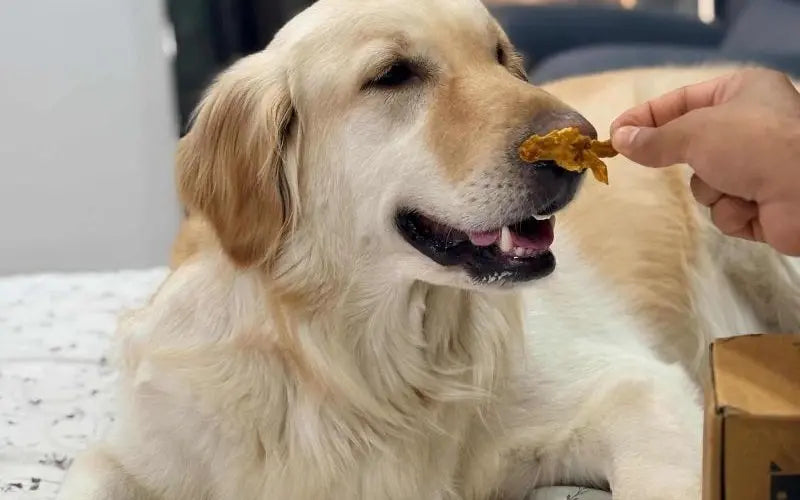
- Replace ultra-processed treats with small pieces of carrot, cucumber, or apple (remove seeds). If you want a packaged option, look for dehydrated single-protein treats made from real chicken breast, as they are high in protein, low in calories, and free from preservatives.
- Break treats into halves or quarters. Your dog cares about frequency, not size.
- Set aside a portion of your dog's regular meal and use that as training treats.
- Stop table scraps entirely during the weight loss period.
5. Increase daily exercise (gradually)
A dog that has been mostly sedentary cannot suddenly handle a 5 km walk without risking joint strain, especially if already overweight. Start with 15-20 minute walks twice a day, and gradually increase the duration. Swimming is a great low-impact option that burns calories without stressing joints. If your dog already shows signs of stiffness, a joint-support supplement alongside regular movement may help.
Indoor play counts too. Tug-of-war, hallway fetch, or hiding treats around the house all keep a dog active on days when it is too hot to walk outside, a real concern across most of India for much of the year.
6. Switch to a high-quality, nutrient-dense food
Portion control and exercise will only go so far if the food itself is low in nutrition. Many commercial dog foods rely heavily on corn, soy, and wheat, which add calories without proportional nutritional value, making dogs eat more just to feel full.
When looking for the best dog food for overweight dogs, focus on food that is high in real protein (chicken, lamb, or fish), low in starch and fillers, free from added sugar and artificial preservatives, and naturally hydrating. A natural, gently cooked food with recognisable ingredients can make a real difference in weight loss with dog food because your dog gets proper nutrition from less food. Pairing it with home-cooked rice or quinoa makes meals more filling and affordable.
When switching foods, do it gradually over 9-10 days: start with 25% new food mixed with 75% old, and slowly increase the ratio. BLEP's feeding guidelines walk you through the transition process step by step.
7. Use slow feeders and food puzzles
Even with the right food and portions, eating speed matters. When a dog finishes a meal in under a minute, their body may not register fullness in time, so they keep looking for more. Slow-feeder bowls with ridges or mazes force a dog to eat around obstacles, slowing them down. Food puzzles and interactive toys add mental stimulation, which also helps reduce food obsession. Adding a small amount of water or bone broth to the meal increases volume with very few extra calories, helping your dog feel satisfied with less.
8. Track progress and stay consistent
According to Cornell University's veterinary guidelines, dogs should lose about 1-2% of their body weight per week. For a 25 kg dog, that is roughly 250-500 grams per week.
- Weigh your dog every two weeks. No pet scale? Stand on your bathroom scale holding your dog, then subtract your own weight.
- Keep a simple log of daily food intake, including treats.
- If weight is not changing after 3-4 weeks, talk to your vet about adjusting portions.
- Get the whole household on the same page. If one person is slipping treats under the table, the plan falls apart.
Most dogs take 6-8 months to reach their target weight safely.
Finding the best food for overweight dogs

Helping your dog reach a healthy weight comes down to consistent portions, daily movement, fewer treats, and honest, nutritious food.
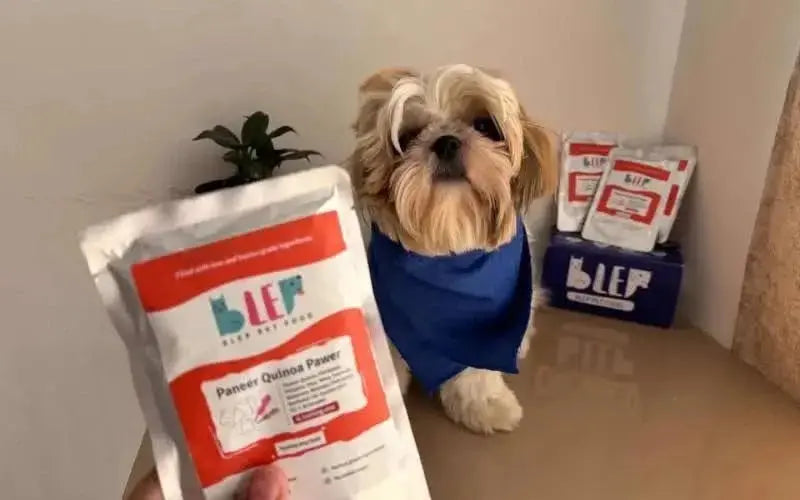
BLEP's Nothing Else Promise means every ingredient on the label is what is inside, and nothing else. 100% natural, zero preservatives, zero sugar, zero fillers, and human-grade. Each pack is meal-sized (100g, 200g, 300g), which takes the guesswork out of portion control. And because the food is naturally high in moisture, your dog feels full without excess calories.
Not sure where to start? Try BLEP's trial pack and let your dog decide.
FAQs
How do I know if my dog is overweight or just big-boned?
Size varies by breed, but excess fat does not. Run your hands along your dog's ribcage. If you can feel the ribs with light pressure, your dog is likely at a healthy weight. If you need to press firmly or cannot feel them at all, extra fat may be the issue. A vet can confirm with a Body Condition Score assessment.
How much should I feed my overweight dog each day?
Feed based on your dog's target weight, not their current weight. Your vet can calculate the right daily calorie intake based on breed, age, and activity level. A diet calculator can also give you a starting estimate. Two measured meals a day with no free-feeding is a solid starting point.
Can I help my dog lose weight with exercise alone?
Exercise helps, but diet is where the real change happens. According to Cornell University's College of Veterinary Medicine, physical activity alone is not enough for meaningful weight loss unless dietary changes are also made. A combination of both gives the best results.
Are certain dog breeds more likely to become overweight?
Labrador Retrievers, Pugs, Beagles, Cocker Spaniels, and Dachshunds tend to gain weight more easily than others. A study on Labrador Retrievers has linked a mutation in the POMC gene to increased appetite and higher body fat. Pet parents of these breeds may need to be extra careful with portion sizes and treat frequency.
Is it safe for my dog to lose weight quickly?
Rapid weight loss is generally not recommended. Losing too much too fast can lead to muscle loss and may cause nutritional deficiencies. Veterinary guidelines recommend 1-2% of body weight per week. For most dogs, reaching their ideal weight takes about 6-8 months.
What human foods can I safely use as low-calorie treats for my dog?
Small pieces of carrot, cucumber, apple (without seeds), watermelon (without seeds), and green beans are generally safe, low-calorie options. Avoid grapes, raisins, onions, garlic, chocolate, and anything with xylitol, as these are toxic to dogs.
Looking to explore more tips on how to look after your furry friend? Check out our other guides like Can Dogs Eat Apples?, Can Dogs Eat Blueberries?, Dog Food for Weight Loss, Raw v/s cooked meat for dogs, Home Remedies to cure tick fever, Finding Good Dog Food in India, How many times should I feed my dog?, Things you should do to keep your pet healthy, Types of Dog Food, How Prebiotics and Probiotics can improve your dog's digestion, Essential Tips for a New Dog Parent, and others. Each guide is designed to help you make better food and care choices for your dog, to keep them happy, healthy, and thriving.
Resources
- Association for Pet Obesity Prevention (APOP) 2022 Survey
- Cornell University College of Veterinary Medicine: Obesity and Weight Loss in Dogs
- VCA Animal Hospitals: Overweight, Obesity, and Pain in Dogs
- Prevalence and Risk Factors for Obesity in Dogs, The Pharma Innovation Journal
- Pet Obesity in India: A Comprehensive Guide, SKS Veterinary Hospital