










Key Takeaways
-
Keep heaters at least one metre from pet beds, blankets and curtains, and switch off portable heaters at bedtime.
-
Oil-filled radiators with a tip-over switch are the safest common choice. Halogen heaters and angithis carry the highest risk.
-
In an AIIMS Delhi study, about 80% of fatal carbon monoxide poisonings happened in winter, mostly in closed, unventilated rooms.
-
Pets often show carbon monoxide symptoms before people do, so a suddenly drowsy or vomiting pet near a heater is an emergency.
-
Heated rooms dry the air, so extra water bowls and moisture-rich food help prevent dog dehydration in winter.
Room heater safety for pets involves more than preventing burns. Blowers, radiators, electric blankets and angithis can expose pets to burns, electrical injuries, fires and carbon monoxide poisoning. Keep heaters away from pet beds, never leave portable appliances unattended, and avoid using coal or fuel-burning heaters in closed rooms. Winter also calls for extra attention to your dog's hydration and comfort.

Is a room heater safe for pets?
Yes, if you choose the right type and use it carefully. Room heater safety for pets matters because dogs and cats seek out warmth and often sleep right beside a heater for hours, far closer than any person would. Fur hides early burns, and senior or stiff pets may not move away even when a surface gets too hot.

Best heater for a home with pets: heater types compared
|
Heater type |
Pet risk |
Main danger |
Safer-use tip |
|
Oil-filled radiator |
Low |
Hot fins, tipping over |
Pick one with a tip-over switch and keep it a metre from beds |
|
Fan heater or blower |
Medium |
Hot air, hot grille, fur near the vents |
Never point it at your pet; place it out of reach |
|
Halogen or quartz |
High |
Exposed glowing elements, burns, fire |
Use a sturdy guard, never leave on unattended |
|
Gas heater |
High |
Carbon monoxide, fire |
Ventilate the room, service it yearly, never run it overnight |
|
Angithi or coal sigri |
Very high |
Carbon monoxide, smoke, burns |
Never use indoors in a closed room or overnight |
Choose one with automatic tip-over and overheat cut-offs.
Burns, cords and tip-overs
Burns and singed fur. Keep heaters at least one metre from beds, blankets and curtains, and leave your pet room to move away. Cats love perching on warm appliances, and short-coated, senior and small dogs are most at risk. Watch for singed fur or red skin.
Cords and tip-overs. Puppies chew cables, and a live cord can cause mouth burns or electric shock.
-
Run cords behind furniture or through cord covers.
-
Keep plugs and connections away from water bowls.
-
Place heaters on flat, stable floors where a running dog can't knock them.
-
Unplug portable heaters when you leave the room or go to bed.
Hot water bottles, heating pads and electric blankets
These cause slow, low-heat burns. Something that feels only warm to your hand can burn skin after hours of contact, and fur hides the damage until it blisters. Paralysed, very old, sedated or post-surgery pets are most at risk because they can't shift away.
Wrap hot water bottles in a thick towel, place them beside your pet rather than under them, and never leave a pet alone on an electric blanket or heating pad.

Angithis and carbon monoxide poisoning in pets
Angithis, coal sigris and gas heaters release carbon monoxide, a gas you can't see or smell. A study at AIIMS New Delhi found about 80% of fatal carbon monoxide cases happened in winter, almost all in closed rooms with no ventilation. Delhi Fire Service warns against burning an angithi in any closed space.
According to MedlinePlus, pets often show carbon monoxide symptoms before people do, so your dog can be the household's early warning.
Signs of carbon monoxide poisoning in pets:
-
Sudden irritability, aggression or anxiety, such as a new fear of noises, children or other animals
-
Refusing to come back indoors after time outside
-
Vomiting
-
Wobbly or uncoordinated movement
-
Unusual sleepiness or drowsiness
-
Laboured or difficult breathing
-
Bright cherry-red gums, lips or ears
-
Tiring quickly during exercise they normally enjoy
What to do: get everyone, people and pets, into fresh air immediately. Then take your pet to an emergency vet. Never use an angithi or coal sigri in a closed room or overnight, and fit a carbon monoxide detector wherever any fuel-burning heater is used.
Dry air and pet dehydration in winter
Heaters dry out indoor air, and many pets drink less when it's cold. A healthy dog needs roughly 50 to 60 ml of water per kg of body weight a day. For cats, it’s also about 50ml of water per kg of lean body weight per day.
-
Keep two or three water bowls around the home, away from the heater.
-
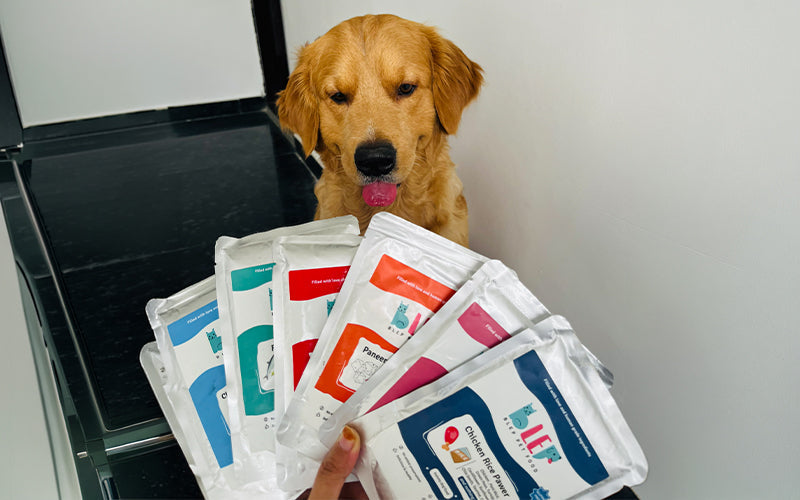
Feed moisture-rich meals, such as BLEP dog food or BLEP cat food.
-
Pour slightly warmed BLEP bone broth over meals or feed as a drink between meals. Use it alongside water, not instead of it, and never give human broth, which may contain salt, onions and spices.

How to keep your pet warm in winter in India without a heater?
-
Raise your pet’s bed: Keep it slightly elevated from cold floors.
-
Add blankets: Choose a dry, draught-free sleeping corner.
-
Use sweaters: Short-coated dogs, such as Indies and Dobermans may benefit from a comfortable winter layer. Cats also like to burrow under warm layers.
-
Dry your pet fully: after baths, foggy walks, or outside times, make sure they get dry since damp fur pulls heat away.
Older dogs often crowd the heater because cold makes stiff joints ache. Our guide to joint care for senior dogs covers how to take care of your dog’s joints in detail. For proactive support, BLEP SUPER Joint Booster is a vet-formulated joint supplement for dogs that supports cartilage repair, helps with joint lubrication and keeps movement comfortable. See your vet if stiffness is new or sudden.

When to take your pet to a vet?
|
Signs |
Urgency |
|
Drowsiness, vomiting, red gums or collapse near an angithi or gas heater |
Emergency: fresh air first, then a vet immediately |
|
Chewed a live cord, mouth burns, coughing or breathing trouble |
Emergency, unplug the heater before touching your pet |
|
Blisters, raw skin or a burn larger than a coin |
See a vet the same day |
|
Singed fur or mild redness |
Call your vet for advice |
For a burn, cool it with cool (not icy) running water for a few minutes, then see your vet. Don't apply ice, creams, ghee or toothpaste.
Frequently Asked Questions
Is it safe to leave a heater on overnight with my dog?
No. Switch off portable heaters at bedtime and use warm bedding instead.
Can cats get burned sitting near a heater?
Yes. Cats perch on warm appliances, so guard heaters and keep them out of reach.
Are oil heaters safer than blowers for pets?
Generally, yes. They have no exposed element or hot air jet, but their fins still get hot.
Can my dog sleep with a hot water bottle?
Only if it's wrapped in a thick towel and placed beside your dog, so they can move away.
Can dogs smell carbon monoxide?
No. It has no smell. Dogs simply feel its effects sooner than people because their body mass is less than ours.
Should my dog wear a sweater indoors?
Only short-coated or senior dogs who feel cold. Take it off near a heater to avoid overheating.
Can room heaters cause dehydration in pets?
Heated indoor air can feel dry, and pets may drink less in winter. Keep fresh water accessible. Moisture-rich meals like BLEP dog food and BLEP cat food also add to the total moisture content that’s going into their body.
Looking to explore more tips on how to look after your furry friend? Check out our other guides like Can Dogs Eat Apples?, Can Dogs Eat Blueberries?, Dog Food for Weight Loss, Raw v/s cooked meat for dogs, Home Remedies to cure tick fever, Finding Good Dog Food in India, How many times should I feed my dog?, Things you should do to keep your pet healthy, Types of Dog Food, How Prebiotics and Probiotics can improve your dog's digestion, Essential Tips for a New Dog Parent, and others. Each guide is designed to help you make better food and care choices for your dog, to keep them happy, healthy, and thriving.
Resources
-
National Center for Biotechnology Information (NCBI). Fatal Carbon Monoxide Poisoning: A Lesson from a Retrospective Study at All India Institute of Medical Sciences, New Delhi. https://pmc.ncbi.nlm.nih.gov/articles/PMC5848400/
-
US National Library of Medicine, MedlinePlus. Carbon Monoxide Poisoning. https://medlineplus.gov/ency/article/002804.htm
-
Dogster, Ask the Vet. Carbon Monoxide Poisoning in Dogs: Our Vet Explains Signs, Causes and Treatment. https://www.dogster.com/ask-the-vet/carbon-monoxide-poisoning-in-dogs/
-
The Times of India. How Angeethis and Heaters Put Many in the Line of Fire. https://timesofindia.indiatimes.com/city/delhi/how-angeethis-and-heaters-put-many-in-the-line-of-fire/articleshow/107002031.cms
-
Cessna Lifeline Veterinary Hospital. How Much Water Should My Dog Drink in the Heat? https://cessnalifeline.com/resources/articles/how-much-water-should-my-dog-drink
-
Cornell University College of Veterinary Medicine, Cornell Feline Health Center. Hydration. https://www.vet.cornell.edu/departments-centers-and-institutes/cornell-feline-health-center/health-information/feline-health-topics/hydration