







Key Takeaways:
-
Labradors have the highest documented obesity prevalence of any breed, and part of the reason is genetic rather than behavioural.
- A deletion in the POMC gene, found in Labradors and flat-coated retrievers, is associated with greater body weight, adiposity, and food motivation.
- Roughly 12% allele frequency means many Labradors are genuinely hungrier than other dogs, so an owner losing the battle at the bowl is not simply being soft.
-
The landmark study showing lean-fed dogs lived a median 1.8 years longer was conducted on Labradors specifically.
- Portion discipline matters more for this breed than any breed-specific formula on a shelf.
Every Labrador owner has been told their dog is greedy. Most have privately wondered whether they are doing something wrong.
Here is the part that rarely makes it into feeding guides: for a meaningful share of Labradors, the hunger is written into the genome. That changes what good advice looks like, because a strategy built on the dog eventually feeling full is a strategy built on something that may not arrive.
What follows covers feeding an adult Labrador. For the first 18 months, best dog food for Labrador puppies in India covers growth, portioning, and the controlled-growth question in detail.
The genetic reason your Labrador is always hungry

Researchers sequencing candidate obesity genes in Labradors found a 14-base-pair deletion in POMC, the gene encoding pro-opiomelanocortin. Published in Cell Metabolism, the deletion disrupts production of two peptides involved in appetite regulation, and carries an allele frequency of around 12% in the Labradors studied.
Dogs carrying it showed greater body weight, greater adiposity, and higher food motivation scores. Among all the breeds tested, the deletion turned up only in Labradors and the closely related flat-coated retriever.
Two details make this more than trivia.
The effect size was substantial, which is notable given that owners, not dogs, control how much food appears. And the deletion was significantly more common in Labradors selected as assistance dogs than in pets, which makes sense: a dog that will work relentlessly for food is easier to train.
So the trait that makes Labradors superb working dogs is the same one that makes them hard to keep lean. Useful to know, and not your fault.
What it does not do is change the answer. A dog that does not self-regulate needs an owner who does.
What the evidence says about keeping a Labrador lean

Conveniently, the best long-term feeding study in dogs was run on this breed.
Forty-eight Labradors from seven litters were paired by sex and weight, and one of each pair was fed 25% less than the other from eight weeks of age for life. Reported in JAVMA, the lean-fed group lived a median of 1.8 years longer. Follow-up radiographic work found restricted feeding delayed or prevented hip osteoarthritis, with the lean group not needing treatment until roughly three years later.
Same food. Same litters. Only the quantity differed.
For a breed genetically inclined to overeat and structurally prone to hip and elbow problems, that is about as direct a piece of evidence as dog nutrition offers.
How much to feed an adult Labrador

Adult Labradors typically sit around 25 to 36kg, with males at the upper end. Rather than reproducing a gram chart that cannot know your dog, the practical sequence:
-
Get a starting figure by weight and activity: The diet calculator sizes portions against your dog's actual weight and age rather than breed averages
-
Split it across two measured meals: Not one large meal, and never free access for this breed in particular
-
Weigh the food, do not eyeball it: A cup is not a unit. Portion creep is how Labradors gain
-
Re-weigh the dog monthly: Large dogs gain slowly enough to escape notice for months
-
Adjust on body condition, not on the chart: Ribs easy to feel under a light covering, waist visible from above, tummy tucked when viewed side-on
The feeding guidelines cover how to transition food over nine days.
If your Labrador is already carrying extra weight, eight ways to help an overweight dog sets out the protocol, and the weight management range is built for it.
Managing a dog that is always hungry
Portion discipline fails on hunger, not on arithmetic. So the useful tactics target the feeling rather than the number:
-
Feed higher moisture: Food carrying water fills more volume for the same calories
-
Use a slow feeder: Extending a 90-second meal to five minutes gives satiety signals time to arrive
-
Take treats out of the extras and into the total: Treats should sit under 10% of daily calories, deducted from meals rather than added on top
-
Use part of the meal as training reward: Costs nothing from the allowance
-
Bulk the bowl with low-calorie veg: A spoon of cooked pumpkin, carrot, or green beans adds volume and fibre for almost no calories
-
Brief the household: A Labrador fed by four people is fed four times, and each person thinks they gave a little
Begging behaviour is not evidence of underfeeding in this breed. Body condition is.
Diet-linked health issues worth knowing

-
Obesity: The best documented, and the one most within your control
-
Hip and elbow dysplasia: Structural and genetic in origin, though excess weight adds load to affected joints, so keeping a Lab lean helps here too. As part of preventive joint care, a daily joint supplement can support the joints: BLEP's SUPER Joint Booster combines glucosamine, chondroitin, collagen, MSM, and green-lipped mussel. If your Lab is limping or stiff, a vet check will pin down the cause
-
Food sensitivities: Chicken and beef appear among commonly reported allergens, though most itching in dogs is environmental rather than dietary
Breed background and health patterns are covered in Labrador breed history, common health issues, and nutritional needs, and the timing question in joint care for dogs.
What to look for in food for a Labrador

Four checks, in order:
-
A named animal protein first: "Chicken," not "meat and animal derivatives"
-
Calorie density you can actually track: Pre-portioned meal packs remove the guesswork that scooping introduces
-
Moisture content: Higher moisture means more volume per calorie, which matters for a dog that eats on motivation rather than need
-
No added sugar, starch, or filler bulk: Calories without nutritional purpose are the last thing this breed needs
Worth saying plainly: there is no single best food for a Labrador in India that solves the appetite on its own. Breed-specific packaging is largely marketing. Measured portions of good food, tracked against body condition, are the actual intervention.
BLEP recipes for Labradors
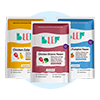
All of BLEP's dog recipes lead with a named animal protein, come in pre-portioned meal packs, and carry no added sugar, starch, or fillers. Chicken Broccoli and Chicken Zucchini are protein-first chicken recipes, and the vegetables they are named for are low in calories and high in fibre and moisture, which suits a dog that eats on motivation rather than need. The full ingredient list for each is published on its product page and printed on the front and back of every pack.
The pre-portioned format is the relevant feature here rather than any recipe in particular. A pack is a portion, which removes the step where a scoop quietly becomes a scoop and a half.
Browse Labrador food, or test acceptance first with a trial pack.
Portions, not products
For most breeds, choosing the food is the main decision. For a Labrador, it is the smaller one.
The breed carries a documented tendency to eat past need, and the best evidence in canine nutrition says the dogs that stay lean live longer and stay sound longer. Both of those findings came from studying Labradors.
Measured meals, a monthly weigh-in, and treats counted in rather than added on. That is the whole programme.
If you want a starting portion for your Lab's weight and activity level, the diet calculator will size it, and you can reach our pet nutritionist over WhatsApp through our contact page.
Frequently Asked Questions
Are Labradors prone to obesity?
Yes, and they have the highest documented obesity prevalence of any breed. Part of that is a genetic variant affecting appetite regulation. Portion control and a consistent feeding schedule matter more than any breed-specific formula.
How often should I feed an adult Labrador?
Twice daily, measured. Splitting the daily allowance across two meals suits the breed better than one large meal, and free access suits it worst of all.
How many calories does an adult Labrador need a day?
That depends on weight, age, and how active the dog is, so there is no single number. A working Lab and a flat-dwelling one of the same weight can differ widely. Size the portion from the diet calculator, then adjust on body condition rather than on the chart.
What human foods are safe for Labradors?
Plain cooked rice, quinoa, carrot, pumpkin, and green beans are commonly used as low-calorie additions. Avoid chocolate, grapes, raisins, onion, garlic, and anything heavily spiced or fried. Anything added still counts toward the daily total.
Should I feed a breed-specific Labrador formula?
Not necessarily. Size, activity, and body condition drive the decision more than breed labelling does. A well-formulated food fed in the right quantity beats a breed-named food fed generously.
My Labrador acts starving even after eating. Is something wrong?
Common in the breed, and often genetic rather than medical. If it has changed suddenly rather than being lifelong, or comes with weight loss or increased drinking, see a vet.
How do I know if my Labrador is overweight?
Feel for ribs under a light covering, look for a waist from above, and check for an abdominal tuck from the side. A weighing scale monthly beats an opinion.
Resources
-
Raffan et al., A deletion in the canine POMC gene is associated with weight and appetite in obesity-prone Labrador retriever dogs, Cell Metabolism, 2016: the POMC deletion, allele frequency, and food motivation findings
-
Kealy et al., Effects of diet restriction on life span and age-related changes in dogs, JAVMA, 2002: the 1.8-year median lifespan difference in 48 Labradors
-
Smith et al., Lifelong diet restriction and radiographic evidence of osteoarthritis of the hip joint in dogs, JAVMA, 2006: delayed onset and reduced severity of hip osteoarthritis
Looking to explore more tips on how to look after your furry friend? Check out our other guides like Can Dogs Eat Apples?, Can Dogs Eat Blueberries?, Dog Food for Weight Loss, Raw v/s cooked meat for dogs, Home Remedies to cure tick fever, Finding Good Dog Food in India, How many times should I feed my dog?, Things you should do to keep your pet healthy, Types of Dog Food, How Prebiotics and Probiotics can improve your dog's digestion, Essential Tips for a New Dog Parent, and others. Each guide is designed to help you make better food and care choices for your dog, to keep them happy, healthy, and thriving.