







Key Takeaways:
- A sensitive stomach shows up as recurring loose stools, vomiting, or gas, rather than a single off day.
- The first step is finding the cause: a too-fast food change, dietary indiscretion, stress, a food trigger, or something that needs a vet.
- To settle an upset stomach, feed small, bland, easy-to-digest meals and keep fresh water available.
- Reintroduce normal food slowly, over a week or two, so the gut has time to adjust.
- Long term, a consistent, easy-to-digest diet with gut support keeps things steady, and firmer stools usually follow.
A dog with a sensitive stomach keeps their pet parent guessing, one soft stool or skipped meal at a time.
The frustrating part is that the cause is rarely obvious, and the fixes people reach for often make it worse. Finding the right sensitive stomach dog food in India, and the right routine around it, is less about one magic product and more about working through the problem in order: spot the signs, find the cause, settle the gut, then feed steadily so it stays settled.
What follows walks through each step for an Indian home, where heat, varied diets, and plenty of table scraps all add to the challenge. The one rule throughout is that a problem that will not settle belongs with your vet.
What a Sensitive Stomach in Dogs Looks Like

A sensitive stomach is not a single bad day but a pattern that keeps coming back, which is what sets it apart from a one-off upset.
The usual signs are recurring loose or soft stools, occasional vomiting, a lot of gas, a rumbling belly, and sometimes a patchy appetite. A dog may seem fine for a stretch, then react to a change of food, a rich treat, or a stressful day. If your dog's stools are more often soft rather than firm, our guide to why a dog's poop is not firm is a useful companion to this one. The goal of everything below is simple: fewer flare-ups and a firmer, more predictable stool.
What's Behind a Sensitive Stomach?
Before changing the bowl, it helps to know what tends to set a sensitive stomach off, because the fix depends on the cause.
- A too-fast food change: Cornell's canine health experts note that switching to a new food too quickly is a common cause of loose stools, since the gut needs time to adjust
- Dietary indiscretion: The Cornell Riney Canine Health Center lists eating something they should not, from bin raids to rich table scraps, as a frequent trigger
- Stress: Cornell notes that a stressful event, such as a vet visit or boarding, can upset a dog's stomach on its own
- A food trigger: Some dogs react to a specific ingredient. The Merck Veterinary Manual lists beef, dairy, chicken, and wheat among the most common food allergens, which can show up as digestive upset as well as itching
- Something medical: Intestinal parasites and underlying illness can also be behind it, which is why a problem that will not settle needs a vet
Working out which of these fits your dog is half the battle, and it often points straight to the fix.
Step by Step: Settling an Upset Stomach

When a flare-up hits, and you are wondering what to feed a dog with an upset stomach, these steps settle most mild cases at home. For anything more than mild, start with your vet.
-
Rest the Gut With a Bland Meal
Cornell Riney Canine Health Center suggests a bland diet such as boiled chicken and white rice for mild cases, noting these foods are easy to digest and give the GI tract a break. Keep it plain, with no oil, salt, or spice.
-
Feed Small and Often
Offer several small servings through the day rather than one or two large bowls, so the gut is not overloaded.
-
Keep Water Available
Loose stools cost a dog fluid, and dehydration can strain the kidneys, so keep fresh water within reach. A little bone broth adds fluid and tempts a flat appetite.
-
Reintroduce Normal Food Slowly
Once the stools firm up, spread the switch back over a week or two, so the gut has time to adjust, rather than jumping straight back.
-
Know When to Call the Vet
Seek veterinary care if diarrhoea does not resolve in 48 to 72 hours, or if there is black, tarry, or bloody stool, repeated vomiting, a continued lack of appetite, or lethargy.
A bland diet is a short-term reset, not a way to feed forever. Plain chicken and rice is not nutritionally balanced for the long run, which is where a proper everyday diet comes in.
What to Feed a Sensitive-Stomach Dog Long Term

Once the gut is calm, the aim is a steady, everyday diet that does not set it off again. A few principles make the biggest difference.
Keep It Easy to Digest
A gently cooked, moisture-rich food is kinder to a touchy gut than an ultra-processed, low-moisture one, and the moisture helps in India's warm climate.
Lead With a Single, Clear Protein
A recipe built on a single, clearly identified meat is easier to trace if a trigger shows up, unlike a vague blend of several.
Avoid the Known Triggers
If your dog reacts to a specific ingredient, keep it out. For a suspected food allergy, Merck describes using an elimination diet, under veterinary guidance, to find the culprit.
Stay Consistent
Constant, abrupt food-swapping is itself a common cause of upset, so introduce any change gradually, and rotate among the recipes your dog does well on rather than switching suddenly at random.
Lose the Fatty Extras
Rich table scraps and oily treats are a frequent trigger, so keep the everyday diet clean. Don’t let your dog raid your plate or the garbage can.
A sensitive-stomach dog food built on these lines takes much of the guesswork out of it. The point is to keep the bowl high-quality and digestible, and free of common triggers like fillers and preservatives.
How Gut Support Keeps Things Steady

A settled gut is partly about the food and partly about the balance of bacteria doing the digesting, which is where gut support earns its place as dog gut health food.
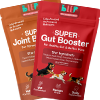
SUPER Gut Booster, BLEP's daily gut-health soft chew for dogs, is formulated with prebiotics, probiotics, and postbiotics alongside digestive enzymes and gut-soothing botanicals to support digestion, nutrient absorption, and a balanced gut microbiome. For a dog prone to soft stools, that steady support can help things stay firm and regular, and research in dogs and cats links gut probiotics to better digestive health.
Our page on the gut and immunity connection explains why a healthy gut matters well beyond digestion. None of this replaces a vet's input for a dog with ongoing trouble; it supports the everyday routine around it.
A Calmer Gut, One Steady Bowl at a Time
A sensitive stomach is rarely fixed by a single change. Instead, it settles when you find the cause, reset the gut gently, reintroduce food slowly, and then feed a steady, easy-to-digest diet that does not provoke it.
Keep the bowl consistent, keep the fatty extras out, support the gut, and give it time. Most sensitive stomachs grow a good deal more predictable once the routine around them does the same.
Related Reads and Help
To get the food transitions right, the feeding guidelines are a useful reference, and our page on the best food for a dog's gut health goes deeper on what a settled gut needs.
If you are still looking for the recipe your dog settles on, a dog food trial pack is a low-commitment way to test one before committing to a full month.
For help matching a food to your own dog's stomach, talk to our team over WhatsApp, and we will help with the food side, with your vet handling anything clinical.
Frequently Asked Questions
What can I feed a dog with a sensitive stomach in India?
A gently cooked, moisture-rich food built on a single, clearly identified protein, fed consistently, suits most sensitive stomachs. Keep fatty table scraps and constant food swapping out, since both are common triggers. For a flare-up, a short bland diet of plain chicken and rice settles the gut before you return to the everyday food gradually.
My dog has loose stools. What should I feed him?
For a mild case, rest the gut with small, bland meals such as boiled chicken and white rice, a little bit of pumpkin for fibre, etc., which are easy to digest. Keep fresh water available. Reintroduce the normal food over a week or two once stools firm up. If the diarrhoea lasts beyond 48 to 72 hours, or you see blood, vomiting, or lethargy, see your vet.
What's the best dog food for gut health and better poop?
A consistent, easy-to-digest diet that leads with high-quality, whole meat and skips cheap fillers, paired with good hydration, does the most for firm, regular stools. BLEP's fresh dog food is built on those lines, and a gut-support supplement with probiotics can help a dog prone to soft stools. Avoid frequent food changes, which upset the balance the gut depends on.
How long does it take a sensitive stomach to settle?
A mild upset often settles within a couple of days on a bland diet, after which you reintroduce normal food over a week or two. A truly sensitive stomach needs a steady diet kept up for several weeks to judge properly. If there is no improvement, or the signs are severe, speak to your vet rather than waiting.
Should I switch my dog's food if it has a sensitive stomach?
Switch only if the current food seems to be the trigger, and then do it gradually over a week or two, never abruptly. Once you find a food your dog does well on, stay with it, since constant switching is itself a common cause of a sensitive stomach.
Looking to explore more tips on how to look after your furry friend? Check out our other guides like Can Dogs Eat Apples?, Can Dogs Eat Blueberries?, Dog Food for Weight Loss, Raw v/s cooked meat for dogs, Home Remedies to cure tick fever, Finding Good Dog Food in India, How many times should I feed my dog?, Things you should do to keep your pet healthy, Types of Dog Food, How Prebiotics and Probiotics can improve your dog's digestion, Essential Tips for a New Dog Parent, and others. Each guide is designed to help you make better food and care choices for your dog, to keep them happy, healthy, and thriving.
Resources
- Cornell Riney Canine Health Center, Diarrhea: common causes including a too-fast food change, dietary indiscretion, and stress; a short-term bland diet; gradual reintroduction of food; hydration; and when to seek veterinary care
- Merck Veterinary Manual, Overview of Food Allergy: the most common food allergens in dogs, their digestive and skin signs, and the use of an elimination diet to identify a trigger
- Merck Veterinary Manual, Gastrointestinal Parasites of Dogs: intestinal parasites as a cause of digestive upset, and the need for veterinary diagnosis and treatment
- Gut probiotics and the health of dogs and cats, a review, Microorganisms, 2023: probiotics' role in supporting canine and feline digestion and a balanced gut microbiome

