






Key Takeaways:
-
Cats descend from a desert-adapted ancestor and carry a weak thirst drive, so they do not reliably drink to make up for a low-moisture diet.
- In a study that changed nothing but water content, cats fed food at 73.3% moisture produced significantly more dilute urine than the same food at 53.2% moisture or lower.
- Two formats can share a moisture percentage and still differ, because processing heat is a separate variable from water content.
-
Available lysine, an essential amino acid for cats, was found to be lowest in extruded food among the three cat food formats tested in a 2026 analysis.
- India's heat and the rise of fully indoor cats both push in the same direction, which makes moisture the first thing to check on a label rather than the last.
A dog that eats something dry will usually go and drink. A cat often will not.
That single difference decides more than protein percentages ever will. Cats evolved to take water in with their food, not from a bowl beside it, and most of the confusion a first-time buyer in India runs into comes from applying dog logic to an animal wired differently.
The types of cat food in India are usually sorted by what the category is called. Sorting them by two things that actually change outcomes works better: how much water the food carries, and how hard it was cooked to get there.
Why a cat's water problem starts with her ancestry

The domestic cat descends from the African wildcat, adapted to arid conditions. Small prey runs roughly 70 to 75% water, so a hunting cat met most of her fluid needs through meals and never needed a strong thirst signal.
Domestic cats kept that physiology and lost the diet, leaving a mismatch: an animal built to hydrate through food, offered food with most of the water removed.
The consequence shows up in the research. A 2014 analysis of urine concentration in apparently healthy cats noted a pattern across earlier studies: cats eating low-moisture food drink more from the bowl, yet total water intake still comes out lower. Voluntary drinking does not close the gap.
What the evidence says about moisture
One study is worth knowing about in detail, because it removed almost every other variable.
Researchers took one complete food at 6.3% moisture, hydrated it to 25.4%, 53.2%, and 73.3%, then fed each version to the same cats. Nothing else changed. Published in the British Journal of Nutrition, cats on the 73.3% version produced urine with significantly lower specific gravity than the 53.2% version or below, with calcium oxalate relative supersaturation approaching the undersaturated zone.
Put plainly: water content alone, holding the recipe constant, changed urine concentration.
Why that matters: dilute urine carries waste and mineral salts out in more fluid instead of leaving them concentrated in the bladder. Concentrated urine is associated with a higher risk of crystals and stones, and with the bladder problems vets group under feline lower urinary tract disease.
A 2025 scoping review of 32 studies reached a consistent conclusion. Cats reaching 42.0 to 52.1 mL per kg of body weight in daily water had urine specific gravity below 1.035, a threshold only met on high-moisture diets or on low-moisture food plus nutrient-enriched water.
Two caveats: sample sizes are small, six cats in that study, and dilute urine is a marker rather than a guaranteed outcome.
The three formats, sorted by what they deliver
Moisture and processing are separate axes. Most buying guides collapse them into one.
|
Format |
Typical moisture |
Processing |
Main trade-off |
|
Extruded, low-moisture |
Roughly 6 to 10% |
High heat, high pressure, short time |
Convenient and shelf-stable, but leaves the cat to make up a large water deficit |
|
High-moisture ultra-processed |
Roughly 60 to 80% |
Cooked at high temperatures in a sealed container |
Solves moisture, though the liquid itself often carries starches and additives, and ingredient quality varies widely |
|
Fresh, gently cooked |
Roughly 60 to 80% |
Cooked at lower temperatures, minimally handled |
Solves moisture with less heat damage, at higher cost per meal |
Notice what the table does not say. Cat food moisture content is not by itself a mark of quality. Two packs can read 78% moisture and differ enormously in what the other 22% holds.
What high heat does to the protein

Cooking any food changes it. Cooking it hard changes it more.
When protein meets sugars under heat, amino acids and reducing sugars bond in what is called the Maillard reaction. The bonded amino acid becomes unavailable to the animal eating it. Lysine, an essential amino acid for cats, is the most vulnerable.
A 2026 analysis in the Journal of Animal Science measured Maillard reaction products and advanced glycation end-products across 26 commercial cat foods spanning all three formats. Available lysine came out lowest in the extruded diets.
Now the honest complication, because it cuts against a convenient story. Earlier work found retorted foods averaged higher concentrations of certain Maillard markers than extruded or pelleted foods. Heat plus moisture drives the reaction, so a wet, hot process is not automatically gentler.
What decides it is what the heat has to work with. The browning reaction needs sugars present to bond with protein, in the same way a chapati browns because of the starch in the flour rather than the heat alone. A recipe with no added sugar or starch gives that reaction far less to feed on. That is a mechanism rather than a measurement.
If you want the process explained on its own, see what retort processing means for cat food.
Why this lands harder on an Indian cat

Three things stack here that imported advice misses.
-
Heat: Higher ambient temperatures raise baseline fluid loss across much of the year.
-
Indoor confinement: More Indian cats now live entirely indoors, in flats, with one water bowl and none of the puddles, dew, and varied water sources an outdoor cat stumbles across. The best food for indoor cats in India is therefore usually moisture-rich cat food made with high-quality meat, not simply whichever food carries the most water.
-
Storage reality: Opened high-moisture food spoils quickly in Indian kitchen conditions, which pushes some households back toward low-moisture food for convenience rather than nutrition.
The third is solvable with meal-sized portions rather than large containers, which removes the leftover problem entirely. BLEP's cat food comes in single-meal packs for that reason: you open what the cat eats now, and nothing sits in the fridge going off.
A reasonable check: work out your cat's daily water needs, then see how much of it the food is contributing before the bowl does anything. To size daily portions by your cat's weight and age, use the cat diet calculator.
How to read the label
Five checks, in order of how much they tell you: moisture percentage, protein converted to a dry matter basis, a named animal protein first, taurine present, and what is bulking.
The full walkthrough sits in how to read cat food labels in India.
Where fresh food fits

Fresh, gently cooked food is not a magic category. It holds moisture at prey-like levels while keeping cooking temperatures lower, addressing both variables at once rather than trading one against the other.
BLEP's cat food is sealed in meal-sized pouches and carries no added sugar, starch, fillers, or chemical preservatives. Sealed packs hold for 12 months without refrigeration. Once opened, refrigerate and serve within 48 hours.
On cost, a straight answer. Fresh food costs more per meal than extruded food. Plenty of households run it as part of the bowl rather than all of it. A sensible order:
-
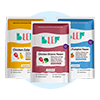
Start with a trial pack: Several recipes in one small box tells you what your cat will actually eat, since cats have opinions
-
Move to a monthly pack once you know: Buying the month in one go brings the per-pack price down, which is where fresh food becomes workable long-term
-
Stretch it with broth: Pouring chicken broth for cats over existing food lifts moisture at a lower cost than switching the whole diet
Browse the cat food trial packs to start.
Two related reads: our science-backed moisture comparison for Indian cat parents goes deeper on moisture alone, and the quick cat food format explainer is a two-minute version of this page.
Frequently Asked Questions
How much moisture should cat food have?
Food in the 60 to 80% range sits close to what prey provides. Below roughly 10%, a cat has to make up a large deficit by drinking, and most do not manage it consistently.
Is my cat drinking enough water?
Hard to judge by watching the bowl, because a cat on high-moisture food will correctly drink less. Concentrated, strong-smelling urine, small litter clumps, and lethargy are better signals, and any of them warrant a vet visit.
Can I feed more than one format?
Yes, and many households do. Introduce anything new gradually over 9 days so the gut adjusts. The cat feeding guidelines set out the day-by-day mix for switching food.
Does high-moisture food cause dental problems?
The idea that low-moisture food cleans teeth is weaker than it sounds, since most pieces shatter rather than scrape. Dental health depends more on brushing than on food texture.
Does BLEP cat food need refrigeration?
Not before opening. BLEP's sealed packs hold for 12 months from the date of manufacturing at room temperature, because the food is cooked inside the sealed pack and nothing can get in afterwards. Once a pack is opened, refrigerate it and serve within 48 hours.
My cat refuses anything new. What now?
Common, and usually texture rather than taste. Warm it slightly, start with a spoonful mixed into the current meal, and give it a week or two.
Start with the water, then judge the rest
Most cat food marketing argues about protein. The variable with the clearest evidence behind it is the one nobody advertises.
Check the moisture figure first, work out what the remaining percentage is made of second, and you will have filtered out most of the shelf before you have read a single claim.
If you want help working out what a sensible bowl looks like for your cat's weight and age, get in touch with us over WhatsApp and our pet nutritionist will talk it through with you.
Resources
-
Buckley et al., Effect of dietary water intake on urinary output, specific gravity and relative supersaturation in healthy adult cats, British Journal of Nutrition, 2011: the isolated-moisture study and urine specific gravity results
-
Kosmal et al., Diet format, protein, amino acids, salt and osmolytes affect water consumption in domestic cats: a scoping review of 32 publications, Journal of Animal Science, 2025: total water intake thresholds and urine specific gravity
-
Rishniw and Bicalho, Factors affecting urine specific gravity in apparently healthy cats, Journal of Feline Medicine and Surgery, 2014: voluntary drinking failing to compensate for low dietary moisture
-
Tate et al., Concentrations of Maillard reaction products and advanced glycation end-products in commercially available cat foods, Journal of Animal Science, 2026: available lysine across extruded, retorted and mildly cooked formats
-
Protein and amino acid modifications during extrusion, Journal of Animal Science, 2022: Maillard reaction, lysine bioavailability and process variables
Looking to explore more tips on how to look after your furry friend? Check out our other guides like 7 things to look for when choosing the best cat food in India, Cat UTI Symptoms, Causes & Treatment, Cat Dehydration: symptoms, causes & how to treat dehydration in cats, Nutrition Food Guide for Senior Cats, Dog Food for Weight Loss, Raw v/s cooked meat for dogs, Home Remedies to cure tick fever, Finding Good Dog Food in India, How many times should I feed my dog?, Things you should do to keep your pet healthy, Types of Dog Food, How Prebiotics and Probiotics can improve your dog's digestion, Essential Tips for a New Dog Parent, and others. Each guide is designed to help you make better food and care choices for your pet, to keep them happy, healthy, and thriving.